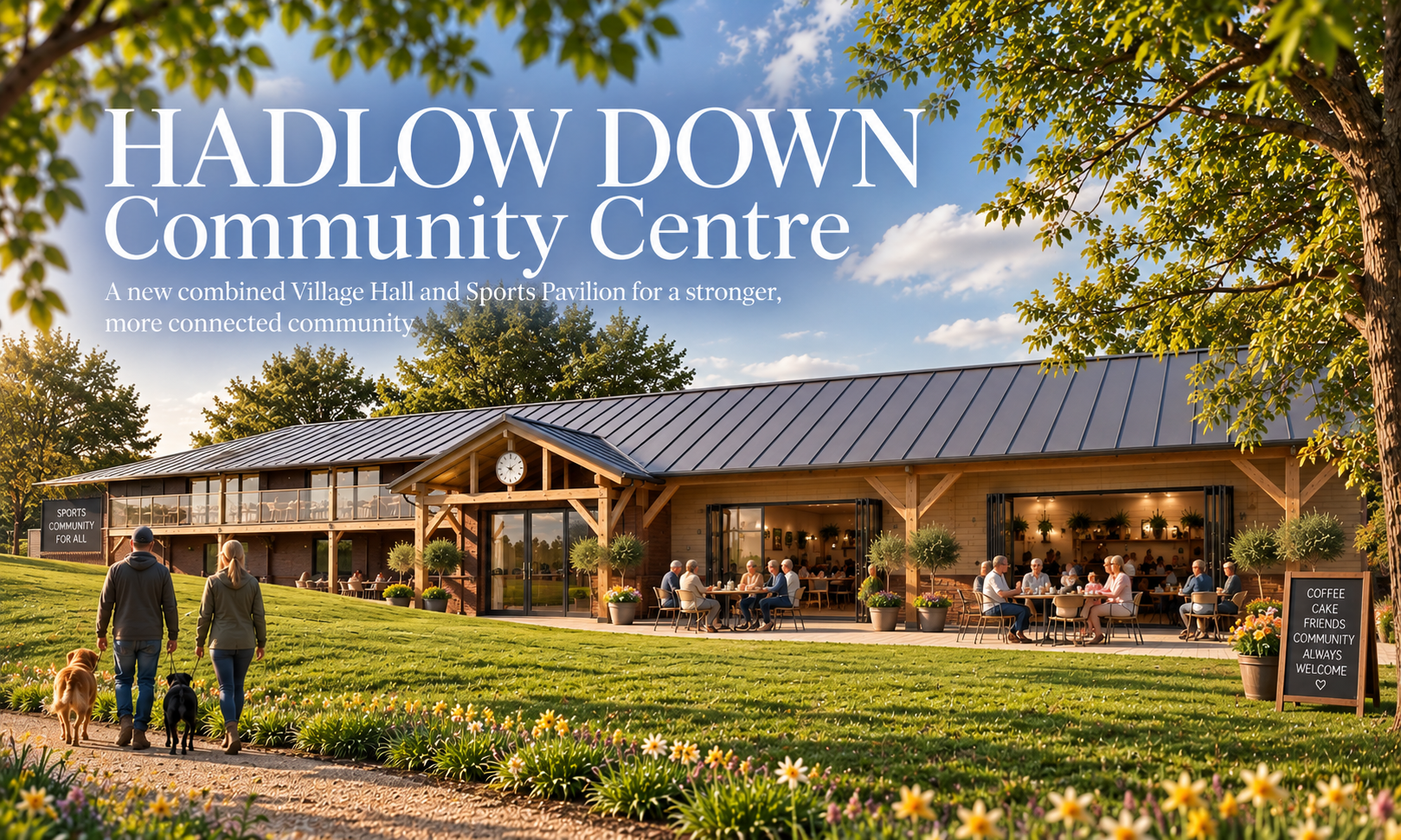
Hadlow Down is a small rural village, but an extraordinary amount happens here.
Lunches are cooked. Older residents are brought together. Children perform on a stage. The Playing Field is maintained. Cricket is played. Flowers are arranged in the church. The village magazine arrives through doors. Markets, fairs, bonfires, breakfasts, drama productions and fundraising events happen throughout the year.
Behind almost all of it are volunteers.
Our audit of volunteering across Hadlow Down has identified at least 9,291 hours of voluntary activity every year — and that is before every village organisation has been counted.
Of those, approximately 6,817 hours are connected with the network of activity around our Village Hall, Playing Field and community life, with a further 2,474 hours supporting the wider village.
That is the equivalent of more than 178 hours of volunteering every single week.
But the numbers only tell part of the story.
What does 9,291 hours actually look like?
It is the people who prepare and serve lunches for older residents.
It is volunteers organising activities for people living with dementia and those who care for them.
It is rehearsals, scenery, costumes, lighting and front-of-house for the village pantomime.
It is preparing the cricket pitch, organising fixtures and supporting village sport.
It is months of preparation for the Village Fayre, Annual Show, Bonfire, Race Night and community markets.
It is the church warden opening St Mark’s each morning, people arranging flowers, helping families with weddings, christenings and funerals, and volunteers supporting the village school.
It is writing, editing, producing and delivering the Village Magazine.
And it is the hundreds of small acts of service which rarely appear on a balance sheet but make a community work.
A significant contribution to our local economy
Volunteering has economic value too.
Using conservative national approaches to valuing voluntary time, the activity we have already identified represents well over £100,000 of value contributed to Hadlow Down every year.
Using a higher comparative volunteer rate of £20 per hour, those 9,291 hours would represent approximately £186,000 every year.
But we do not believe the real value of volunteering can be measured simply in pounds.
Its greatest value is what those hours create: connection, friendship, purpose, resilience and belonging.
Our community buildings make this possible
This is why the future of our Village Hall and Sports Pavilion matters so much.
They are not simply buildings in which activities happen.
They are part of the social infrastructure that makes those activities possible.
A lunch club needs somewhere to cook and eat.
A drama group needs a stage.
A fitness class needs a hall.
A sports club needs changing facilities, storage and somewhere accessible for people to gather.
A community market needs tables, power, parking and toilets.
A volunteer needs somewhere to volunteer.
And increasingly, our existing facilities are making that harder.
Our community consultation has repeatedly identified inadequate parking, poor accessibility, insufficient storage, ageing facilities and a lack of suitable space as barriers to participation. The 2023 Community Survey found substantial latent demand for more social, sporting, cultural, educational and wellbeing activity if better facilities were available.
The current website already captures this principle well: the new Centre is intended as somewhere people can “meet, move, learn, perform, volunteer, celebrate and simply spend time together.”
What happens if those spaces disappear?
There is a danger in looking at the possible closure of an ageing Village Hall or Pavilion and seeing only the loss of a building.
The consequences travel much further.
Activities can disappear with it. Groups can become harder to sustain. Older or less mobile residents may find it harder to participate elsewhere. Children lose places to perform and gather. Volunteers lose the physical spaces around which their contribution is organised.
And once those networks disappear, they can be extremely difficult to rebuild.
That is particularly significant in a rural community where opportunities for everyday social contact are already more limited.
Volunteering is good for the volunteer too
There is another part of this story which matters enormously.
Volunteering isn’t simply something people give to Hadlow Down. It is something from which volunteers themselves benefit.
Taking part provides routine, purpose, friendship and a reason to leave the house. It brings generations together and creates informal networks of people who notice when someone hasn’t turned up, needs a lift, is struggling, or simply needs company.
We think of this as a form of social fitness.
Just as physical activity helps maintain our bodies, regular participation helps maintain the relationships, confidence and sense of belonging that support individual and community wellbeing.
Protecting opportunities to volunteer therefore protects not only the recipients of those 9,291 hours, but the volunteers themselves.
More than fifteen years of listening
The case for the new Community Centre has not been created by HDCC in isolation.
It has developed through years of community engagement — household consultation, surveys, public meetings, design workshops, conversations with existing users, pop-up surgeries and formal democratic consultation.
Community feedback has influenced the design and facilities proposed, while the September 2025 Parish Poll demonstrated support for committing substantial village resources to the project. The website currently records that the two measures supported through the Poll could together represent approximately £500,000 of local contribution.
Our consultation has also included people who question or oppose aspects of the project. Their concerns about cost, parking, traffic, location and scale form part of the evidence too.
Community consultation isn’t meaningful unless people are able to disagree.
From consultation to action
The result is a project increasingly shaped around what people have told us they need:
You told us accessibility matters.
The new Centre will provide an accessible, inclusive community facility.
You told us parking is a barrier.
Phase 1 includes a substantially improved car park.
You told us Hadlow Down needs places to meet.
The Centre provides flexible community spaces alongside the main hall.
You told us our stage matters.
A permanent stage remains at the heart of the new Village Hall.
You told us you wanted somewhere simply to meet for coffee.
Our plans include a volunteer-led community café.
You told us about isolation and wellbeing.
We are designing a place capable of supporting lunch and dementia groups, health and wellbeing outreach, warm-hub activity and informal social connection.
You told us you wanted more opportunities for activity.
The hall has been designed for sport, exercise, dance, performance, community events and other flexible uses.
This is what “Built around the people who will use it” means.
What we are doing now
Consultation does not stop because planning permission has been achieved.
As we prepare major funding applications, HDCC is undertaking a further phase of engagement with existing and potential users, including older residents, lunch and dementia groups, children and young people, the village school, sports users and other community organisations.
We want the evidence for the next stage of the project to be as much about people and outcomes as it is about bricks and mortar.
And we will continue to listen.
The building is the infrastructure. Community is the outcome.
Hadlow Down already possesses something money cannot simply buy: people willing to give their time to one another.
At least 9,291 hours every year.
The purpose of the new Community Centre is not to create that community.
It is to give it somewhere to thrive.